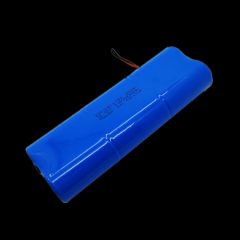
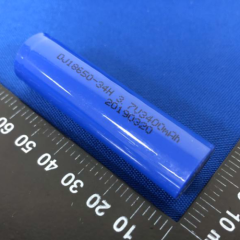
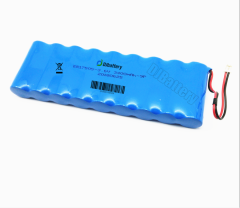
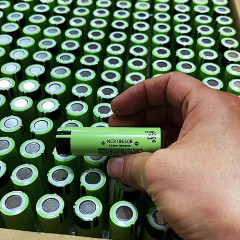
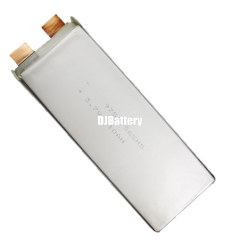
Airsoft Guns Battery
Here are some regular models for your choice:
| Item no. |
Spec discription | C-rating continous | dimension Max. (H*W*L)mm |
weight Appr. gram (g) |
discharge connector |
Cell model |
| 1 | 550mAh 2S1P 7.4V | 40C | 12*19*80 | 36 | Mini Tamiya & SM | 551875RH20 |
| 2 | ||||||
| 3 | 550mAh 3S1P 11.1V | 40C | 18*19*82 | 52 | Mini Tamiya & SM | 551875RH20 |
| 4 | ||||||
| 5 | 750mAh 2S1P 7.4V | 30C | 13*17*108 | 44 | Mini Tamiya & SM | 6016100RH15 |
| 6 | ||||||
| 7 | 750mAh 3S1P 11.1V | 30C | 19*17*109 | 64 | Mini Tamiya & SM | 6016100RH15 |
| 8 | ||||||
| 9 | 850mAh 2S1P 7.4V | 30C | 12*20*101 | 44 | Mini Tamiya & SM | 551895RSH25 |
| 10 | ||||||
| 11 | 850mAh 3S1P 11.1V | 30C | 17*20*103 | 68 | Mini Tamiya & SM | 551895RSH25 |
| 12 | ||||||
| 13 | 950mAh 2S1P 7.4V | 30C | 7*21*100 X2 | 60 | Mini Tamiya & SM | 552096RSH15 |
| 14 | ||||||
| 15 | 950mAh 3S1P 11.1V | 30C | 7*20*100 X3 | 87 | Mini Tamiya & SM | 552096RSH15 |
| 16 | ||||||
| 17 | 950mAh 3S1P 11.1V | 30C | 7*20*103 X2 | 52 | Mini Tamiya & SM | 552096RSH15 |
| 20 | ||||||
| 21 | 1200mAh 2S1P 7.4V | 30C | 13*18*137 | 63 | Mini Tamiya & SM | 6518130RH15 |
| 22 | ||||||
| 23 | 1200mAh 3S1P 11.1V | 30C | 18*18*138 | 90 | Mini Tamiya & SM | 6518130RH15 |
| 24 | ||||||
| 27 | 1200mAh 2S1P 7.4V | 30C | 11*20*127 | Mini Tamiya & SM | 5020117SH15 | |
| 28 | ||||||
| 29 | 1200mAh 3S1P 11.1V | 30C | 16*20*127 | Mini Tamiya & SM | 5020117SH15 | |
| 30 | ||||||
| 31 | 1200mAh 3S1P 11.1V | 30C | 7*20*127*3 | Mini Tamiya & SM | 5020117SH15 | |
| 32 | 1250mAh 2S1P 3.2V | 40C | 18*20*127 | LF8520117SH20 | ||
| 33 | 1250mAh 3S1P 3.2V | 40C | 26*20*127 | LF8520117SH20 |


When it comes to airsoft guns, batteries are critical for powering Automatic Electric Guns (AEGs). Here's a structured overview to help you choose, use, and maintain them effectively:
1. Battery Types
NiMH (Nickel-Metal Hydride):
Pros: Affordable, durable, low maintenance, no fire risk.
Cons: Heavier, lower energy density (shorter runtime), slower discharge rate.
Common Voltages: 8.4V, 9.6V.
LiPo (Lithium Polymer):
Pros: Lightweight, higher capacity (mAh), faster discharge (better trigger response), compact.
Cons: Requires careful charging/storage, risk of swelling/fire if mishandled.
Common Voltages: 7.4V, 11.1V (use 11.1V only with a MOSFET to protect trigger contacts).
LiFe (Lithium Iron Phosphate):
Pros: Safer than LiPo, stable, longer lifespan.
Cons: Slightly lower voltage (9.9V nominal), less common.
2. Key Specifications
Voltage (V): Determines rate of fire and power. Match to your gun’s specs (e.g., 7.4V LiPo for stock guns; 11.1V for upgraded builds with MOSFETs).
Capacity (mAh): Higher mAh = longer runtime (e.g., 1200mAh vs. 3000mAh).
Discharge Rate (C Rating): For LiPos, higher C = more current output (e.g., 20C–50C). Ensures consistent performance during rapid fire.
3. Configurations & Fit
Shapes: Stick, nunchuck (U-shape), butterfly, or brick. Check your gun’s battery compartment (e.g., M4 stocks often use nunchuck types).
Size: Measure compartment dimensions to avoid fit issues. Higher mAh batteries may be bulkier.
4. Connectors
Common Types:
Tamiya (Small/Large): Standard but less efficient.
Deans (T-Plug): Better conductivity, preferred for high-performance setups.
XT60: Less common but robust.
Adapter: Use if gun/battery connectors mismatch.
5. Charging & Storage
Chargers:
NiMH: Use a smart charger with auto-shutoff.
LiPo/LiFe: Must use a balance charger to avoid overcharging.
Storage:
Store LiPos at 3.6–3.8V per cell (use storage mode on charger).
Keep batteries in a fireproof bag/container, away from heat/moisture.
6. Safety & Maintenance
LiPo Care:
Never puncture, over-discharge, or leave charging unattended.
Check for swelling/leaks; dispose of damaged batteries safely.
General Tips:
Avoid full discharges; recharge NiMH after use.
Clean connectors periodically to prevent corrosion.
7. Compatibility Notes
MOSFETs: Recommended for 11.1V LiPos to protect trigger contacts from arcing.
Airsoft Guns Battery